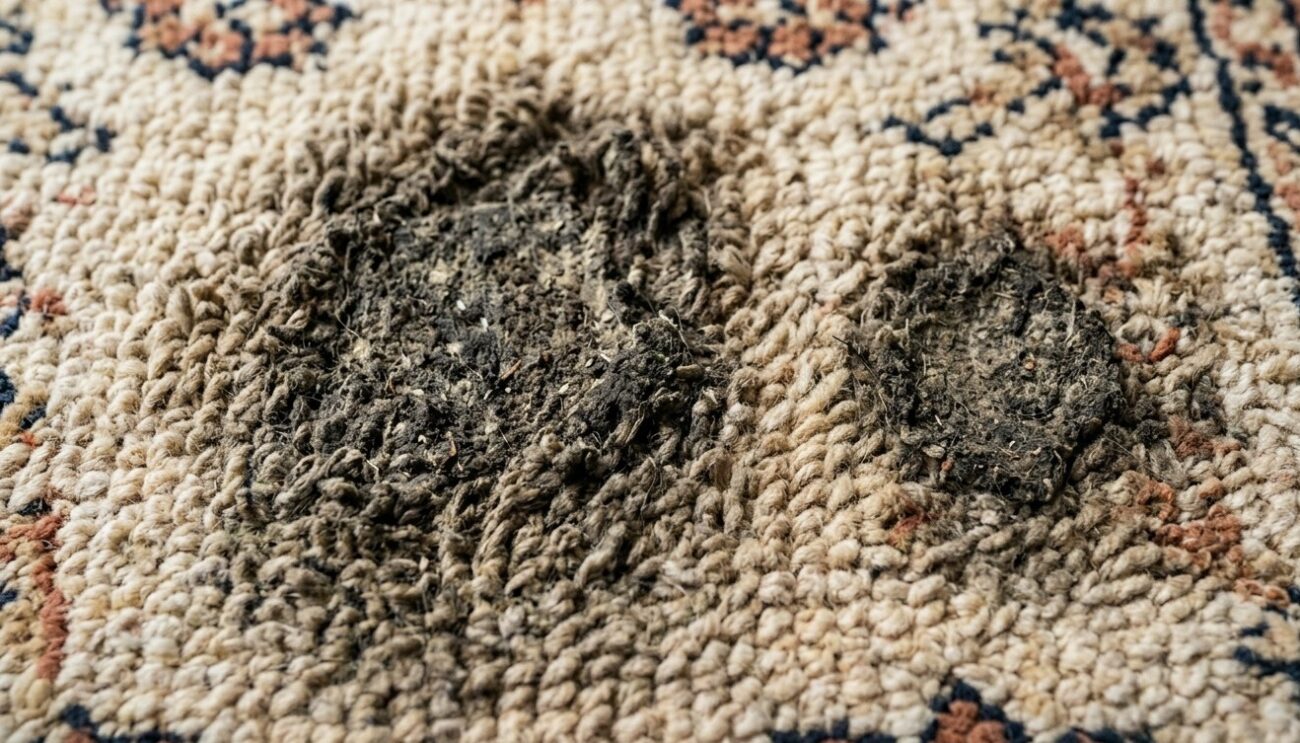
Living near a busy London road comes with a well-understood set of trade-offs. The convenience of transport links on one side; the noise, the fumes, and the interminable queues of stationary traffic on the other. What most people do not immediately add to that list – but genuinely should – is what all of that traffic is quietly depositing inside the home. If your property sits on or near one of London’s busier arteries, your carpets are accumulating a slow, steady cocktail of particulate matter, carbon deposits, brake dust, and airborne oily residues every single day. The results tend to announce themselves gradually: a greyish shadow developing along the skirting boards, a darkening near the window, a general dullness to carpets that were once considerably brighter. The staining is real, it is specific in character, and – crucially – it responds to a specific approach that differs in important ways from ordinary carpet cleaning.
What Is Actually Settling Into Your Carpet?
London’s air – and we shall be diplomatically brief about this – carries a remarkably complex mixture of particles, particularly in areas with dense traffic. The main culprits settling into roadside carpets are carbon soot from exhaust emissions, fine metallic particles produced by brake wear, microscopic rubber compounds shed by tyres, and the broader class of polycyclic aromatic hydrocarbons that attach themselves to all of the above.
What makes these particles especially problematic on carpets, compared with ordinary tracked-in dirt, is their size and their composition. They are extremely fine – fine enough to be carried on air currents through gaps around window frames, door seals, and ventilation points, rather than simply being walked in on shoes. They also arrive partially bonded to oily hydrocarbon compounds from combustion, which means they do not behave like water-based dirt. They resist straightforward water-and-detergent treatment, spread readily if disturbed whilst dry, and have a particular affinity for carpet fibres that makes them cling tenaciously rather than release.
The distinctive grey-to-black shadowing that develops along the edges of a carpet near windows and external walls has a proper name: filtration soiling. In a London property near a busy road, it accumulates faster and more intensely than in almost any other domestic setting in the country.
Why Filtration Soiling Is Not Ordinary Dirt
The Oily Hydrocarbon Problem
Filtration soiling earns its reputation for stubbornness from that oily component. The carbon particles that make up most of the visible darkness arrive embedded in hydrocarbon residues from combustion – a thin, invisible layer of oily material that acts as both a carrier and an adhesive, binding particles to carpet fibres with considerable tenacity.
This is why wiping at a pollution shadow with a damp cloth – the instinctive first response for most people – almost never works and frequently makes things worse. Water does not break down oily hydrocarbon residues; it displaces loose surface particles sideways, potentially spreading the affected area whilst doing nothing whatsoever about the bound material beneath. For this reason, the method matters enormously, and the starting point is probably the opposite of what instinct suggests.
What You’ll Need
The kit list here differs in a couple of important respects from standard carpet cleaning supplies, specifically because of that oily component:
- A vacuum cleaner with strong suction, ideally with a HEPA filter to capture fine particles effectively
- Several clean white cloths
- Dry-cleaning solvent, available from hardware shops, or a proprietary pre-treatment spray formulated for grease and oil
- A mild carpet shampoo or a solution of washing-up liquid and warm water
- Cold water for rinsing
- A spray bottle
- Bicarbonate of soda
- A soft-bristled brush
Dry-cleaning solvent deserves a specific mention: it is genuinely effective against the oily fraction of filtration soiling in a way that water-based solutions on their own simply are not. It is not always essential for light surface deposits, but for established pollution staining it is the ingredient that makes the real difference.
The Step-by-Step Removal Method
Step 1 – Thorough Dry Vacuuming Before Anything Else
This step is non-negotiable, and the one most frequently skipped by people eager to get to the visible cleaning. Pollution particles not yet deeply embedded in the pile can be removed by vacuuming alone – and any particle you lift dry is one you do not have to dissolve and extract wet later, which is considerably more work.
Vacuum the affected area slowly and methodically, using overlapping passes and paying particular attention to the perimeter zones and corners where filtration soiling concentrates most heavily. Use maximum suction. A HEPA filter is worth prioritising here because the particles involved are fine enough to pass straight through a standard filter and be redistributed back into the air, which comprehensively defeats the purpose.
Do not brush the area before vacuuming. Brushing dry pollution particles agitates and disperses them deeper into the pile rather than lifting them out.
Step 2 – Pre-Treatment for the Oily Residue
With loose surface material removed, the remaining staining is predominantly the oil-bound fraction, and this must be addressed before any water-based cleaning takes place – not alongside it, and certainly not after.
Apply a small amount of dry-cleaning solvent to a clean white cloth – not directly onto the carpet – and blot it gently onto the stained area, working from the outer edge inward to avoid spreading. The solvent dissolves the hydrocarbon residues binding the carbon particles to the fibres, releasing their grip so that subsequent wet cleaning can actually do its job.
Allow the solvent to dwell for two to three minutes, then blot firmly with a fresh dry cloth to lift the loosened material. You should see a visible transfer of grey or black residue onto the cloth. Move to a clean section of cloth with each press – reusing a soiled area simply redeposits what you have just removed, which is a frustrating way to spend an afternoon.
Step 3 – The Wet Cleaning Stage
With the oily fraction addressed, water-based cleaning can now work properly. Mix a small amount of carpet shampoo or washing-up liquid with warm water to create a mild solution. Apply it sparingly to the treated area using a cloth or a light mist from a spray bottle – damp, not wet – and work it in gently with a soft-bristled brush, using circular motions over the stained area before switching to straight strokes following the natural pile direction.
Leave the solution to dwell for five minutes, then blot firmly with clean white cloths to lift the emulsified residue. Repeat if the staining is significant, always moving to fresh cloth and always blotting rather than rubbing.
Step 4 – Rinsing, Deodorising, and Drying
Rinse the treated area using cold clean water applied via a lightly dampened cloth or fine spray, then blot thoroughly dry. Cleaning product residue left in the pile will attract fresh dirt more rapidly – which is, needless to say, the opposite of what you are trying to achieve.
Once blotted as dry as possible, apply a light, even layer of bicarbonate of soda over the area, leave it for an hour, then vacuum it away carefully. This absorbs residual moisture and deals with any faint odour from the hydrocarbon compounds. Allow the carpet to finish drying naturally with as much airflow as the room and the British weather between them will permit.
Where Pollution Staining Concentrates – And Why It Follows a Pattern
If you have noticed that the grey shadowing on your carpet traces a remarkably consistent geography – along the room perimeter, beneath doors, in a halo pattern below window frames, and along the edges of fitted carpets near skirting boards – this is filtration soiling behaving precisely as its name implies.
Air moves through a building constantly, finding the path of least resistance through every gap and imperfect seal. As it moves, it carries fine particles – and wherever that airflow is forced through a narrow compression point, the carpet acts as a filter, trapping particles at the point of entry. The tighter the gap and the heavier the traffic volume outside, the more concentrated the soiling at that specific location.
Understanding this pattern is practically useful because it tells you exactly where to direct regular maintenance attention, rather than waiting for staining to become pronounced before acting.
Keeping Pollution Build-Up Under Control Long-Term
Prevention is genuinely more effective than treatment in this particular context, and a few consistent habits make a meaningful difference over time.
Frequent vacuuming of perimeter areas and under-window zones – rather than focusing exclusively on the central high-traffic areas of the room – removes particles before they have time to bond firmly with fibres. Once a week in a roadside London property is not excessive; for ground-floor flats on particularly congested streets, it is arguably the minimum worth committing to.
Door and window seals in reasonable condition reduce the volume of particle-laden air penetrating the interior in the first place. A quality brush-pile doormat at every external entry point also reduces the amount of particulate matter brought in directly underfoot, which compounds the airborne deposit problem considerably more than most people realise.
When Professional Cleaning Is the More Practical Answer
The method above handles surface and moderately embedded pollution staining effectively in most residential situations. For carpets that have been accumulating filtration soiling over several years without treatment, however, the staining can penetrate deeply enough into the pile that home cleaning produces only limited improvement.
Heavily soiled perimeter areas on light-coloured carpets – the cream and pale grey fitted carpets found in countless flats along routes such as the Euston Road, the Embankment, or the Old Kent Road – can develop staining that has worked through to the carpet backing. At that depth, the hydrocarbon compounds have oxidised and bonded more permanently with the fibres, and shifting them requires hot water extraction equipment operating at a pressure and temperature no domestic machine can match.
Properties combining heavy traffic pollution with other soiling factors – cooking residues, pet hair, general tracked-in grime – also tend to find that the cumulative burden responds far better to a single thorough professional treatment than to a succession of partial home remedies, each addressing one element whilst leaving others firmly in place.
